Executive Summary
Bottom line: Among major console platforms, PlayStation applies one of the strictest PSN region lock models because your account country is permanent-set at registration and never changeable. Game download codes, wallet top-ups, PS Plus vouchers, and most DLC keys redeem only on a PSN account whose home country matches the code’s issuing storefront. Sony does not refund, exchange, or convert codes purchased for the wrong territory.
| Platform | Lock Model | Can Change Store Region? |
|---|---|---|
| PlayStation (PSN) | Permanent account country | No - locked at creation |
| Nintendo eShop | Strict currency zone | Restricted - balance/subscriptions block changes |
| Steam | Store country + publisher SKU | Limited - payment-method rules apply |
| Xbox / Microsoft | Account region | Once every 3 months (balance must be spent) |
This guide is our PlayStation-specific deep dive. For cross-platform territory labels (Global, EU, NA, CIS), see Regional Restrictions. For key-vs-shared-account risk, see PlayStation Key vs. Account.
Scope: This guide covers pre-purchase region matching for PSN game codes and wallet vouchers. For cross-platform region block and regional lockout primer, see Region Block Guide. For post-purchase error troubleshooting, see Game Key Activation Errors (PlayStation section). For wallet-card scam and chargeback patterns, see Gaming Gift Card Audit. For why import regions exist, see Pricing Policies.
Buyers searching for cheap PSN codes often discover region lock only at redemption - PlayStation displays this code cannot be used in your account’s country/region or reports the voucher is invalid. That failure mode is usually not fraud; it is territory mismatch between the code’s issuing storefront and your PSN account country. This audit explains how PlayStation Store region lock works, how to read marketplace listings, and how to dispute mislabeled inventory.
Related research: PlayStation Key vs. Account · Regional Restrictions (cross-platform) · Gift Card Audit · Activation Errors Guide · Steam Region Lock Guide · Xbox Region Lock Guide · Nintendo Region Lock Guide · Game Keys Audit Hub · Difmark Review.
How PlayStation Store Region Lock Works
Every PlayStation Network account has a home country selected during registration. That country determines your PlayStation Store pricing, wallet currency, available payment methods, tax display, and—what matters for gray-market buyers—which voucher codes may attach to your library. When you redeem through console Settings → Account Management → Redeem Codes, or via the PlayStation Store web portal signed into your account, Sony validates the code’s territory against that home country.
According to Sony’s PlayStation Store documentation, prepaid wallet codes and download codes are compatible only with the storefront country or region where they were intended to be sold. Console hardware region and your physical location do not override account country at redemption.
Permanent Account Country (Critical Difference)
Unlike Xbox, where Microsoft permits legitimate account region changes on a three-month cycle, Sony does not allow PSN country changes after account creation. Support tickets cannot migrate an existing profile to another storefront. This makes pre-purchase region matching more important on PlayStation than on platforms with flexible store-country updates.
We do not recommend VPN-based account creation or circumvention tactics, as they violate Sony’s terms and may trigger enforcement without guaranteeing redemption success. This guide documents how locks work so buyers can match listings before payment.

Marketplace Labels vs. Sony Storefront Rules
Resellers use shorthand that rarely maps 1:1 to Sony’s internal territories:
- US / NA: United States PlayStation Store; verify whether Canada is included - it is not.
- EU / EMEA: Euro-zone or multi-country European inventory, not valid on US or UK accounts unless explicitly listed.
- UK: Separate from EU post-Brexit for many Sony SKUs; do not assume EU codes work on UK PSN.
- TR / PL / IN: Country-specific import pricing; high dispute rate when titles say Global PSN Code.
- Global: Intended for wide activation, but exclusions are common. Read the description for country lists, not the title alone.
Our cross-platform primer on these labels lives in Regional Restrictions; this page applies them to PSN’s redemption flow specifically.
Product Types: What Gets Region-Locked
| Product Type | Region Locked? | Common Marketplace Label |
|---|---|---|
| Digital game download code | Yes - PSN storefront | PS5 Code, PSN Key, Global* |
| Wallet top-up voucher | Yes - currency zone | $10 US, €20 EU, £10 UK |
| PS Plus / subscription code | Yes - account country | 12-month US, EU Essential |
| DLC / season pass code | Yes - must match base game region | Often mislabeled Global |
| Physical PS5 / PS4 disc | Generally no - playback | Import disc OK; bundled DLC voucher may lock |
*Budget listings marked Global frequently map to Turkey, Poland, or other import zones. See our audit tests below.
Common PSN Region Error Messages
When a voucher fails territory validation, PlayStation may show:
- “This code cannot be used in your account’s country/region.” - Classic territory mismatch. Compare listing region to Settings → Account Management → Account Information → Country/Region.
- “The voucher code is incorrect or is no longer valid.” - May mask region mismatch, typo, prior redemption, or voided code. Sony does not always distinguish causes in the message text.
- “This code has already been used.” - Not a region issue; open a marketplace dispute with timestamp proof.
- Wallet: Code rejected at redemption - frequently wrong currency zone (USD card on UK account).
Step-by-step recovery after a failed redemption is in our Game Key Activation Errors guide (PlayStation section). This page focuses on preventing mismatches before checkout.
Audit Methodology: Region Mismatch Test Matrix
We executed controlled redemption tests on dedicated PSN profiles following our four-pillar framework. The objective was to measure how often marketplace region labels match actual code behavior, not to endorse VPN or account-sharing tactics.
| Test | Listing Label | PSN Account Country | Outcome |
|---|---|---|---|
| Test 1 | EU PSN key (explicit) | Germany | Success - redeemed in 4 minutes |
| Test 2 | US PSN key | United States | Success - territory match confirmed |
| Test 3 | “Global” AAA title (budget listing) | United Kingdom | Failed - Turkey-priced inventory |
| Test 4 | PSN Wallet TRY card | United States | Failed - currency zone mismatch |
| Test 5 | UK-labeled key (explicit) | United Kingdom | Success - seller label accurate |
| Test 6 | EU DLC code | UK account (UK base game owned) | Failed - DLC storefront must match base game region |
Tests 3, 4, and 6 dominate gray-market dispute volume on PlayStation: structurally valid codes with wrong territory, or Global titles masking import zones. Escrow marketplaces that preserve listing screenshots score highest on refunds - Marketplace Landscape 2026.
Pre-purchase Checklist: Match Region Before You Pay
Extend our Buyer Safety Guide with PSN-specific territory rules before any secondary-market purchase.
PlayStation Store Region Checklist
- Confirm PSN country: Settings → Account Management → Account Information → Country/Region (console) or account management on web.
- Match the listing’s explicit region tag (US, EU, UK, TR)-not the product title alone.
- For wallet vouchers, verify currency ($, €, £, TRY) matches your PSN account currency.
- For DLC, confirm the base game was purchased on the same PSN storefront region.
- Screenshot the full listing description and region field at checkout.
- Prefer escrow-protected marketplaces (Difmark 9.1/10, Eneba 8.4/10) and redeem immediately after delivery.
What If You Already Bought the Wrong Region?
Sony generally will not convert, refund, or exchange a code purchased for another territory even before redemption. Recovery routes run through the seller and marketplace, not PlayStation Support as a secondary buyer:
- Screenshot the error with partial code redaction and visible timestamp.
- Compare listing region to your PSN country-mislabeled SKUs are deliverable disputes, not buyer error.
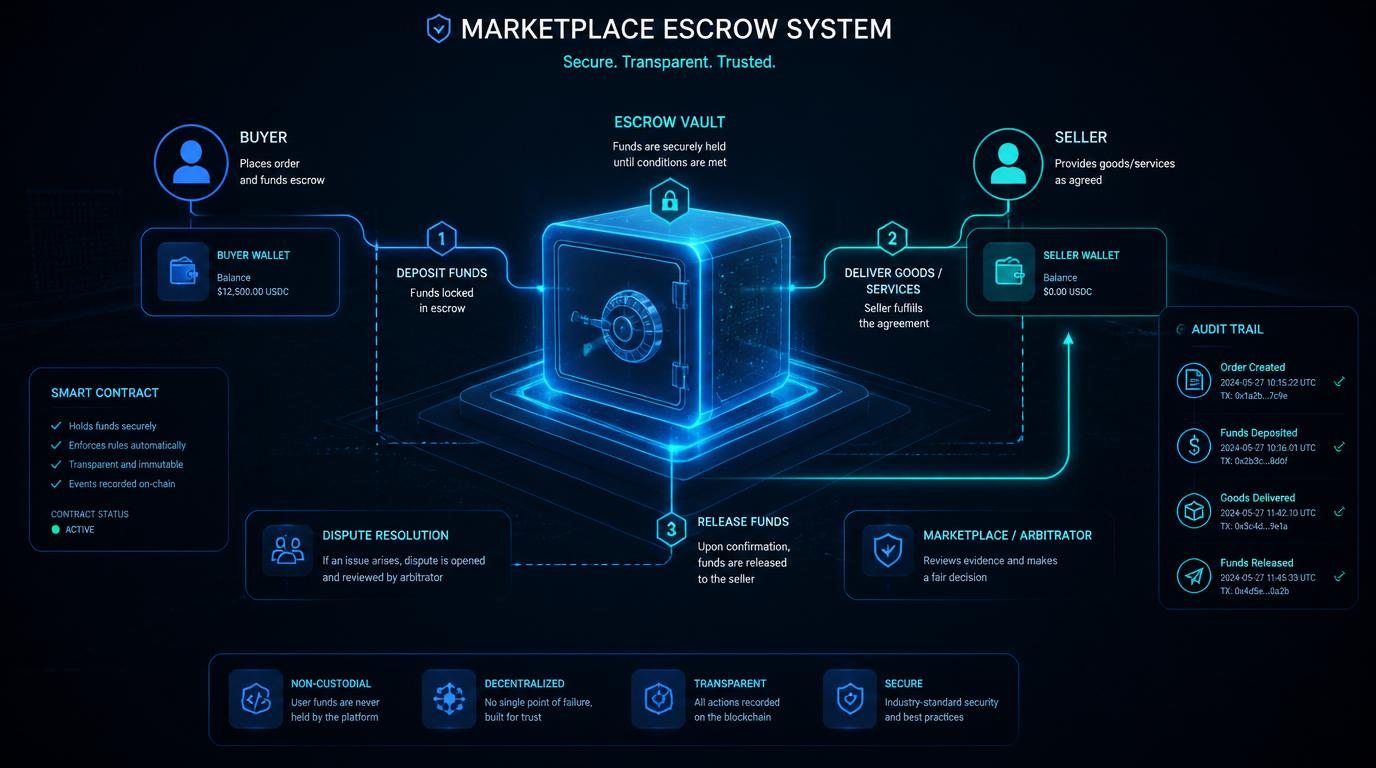
- Open a marketplace dispute within the escrow window with invoice, listing capture, and error screenshot.
- Do not retry redemption repeatedly-archive evidence and escalate once through buyer protection.
Secondary PSN Account Strategy (Advanced)
Because PSN country cannot be changed on an existing profile, some buyers maintain a second PlayStation Network account registered to another country when they intentionally purchase that region’s catalog. This is a structural choice, not a fix for accidentally buying the wrong key on your primary profile. It requires separate credentials, region-appropriate wallet funding (often gift cards, since foreign credit cards frequently fail Sony’s country checks), and acceptance that libraries and subscriptions do not merge automatically.
Primary-console sharing can allow other local users to access content from a secondary account under Sony’s documented sharing rules - DLC compatibility still depends on matching game and add-on storefront regions. Most buyers should avoid this complexity and match codes to their main account instead.
Dispute note: If the listing stated the correct region and the code still fails, the issue may be prior redemption or fraud-sourced inventory, not region lock. Route those cases to activation error troubleshooting and marketplace escrow, not repeated redemption attempts.
Gray-Market Pricing and Region Arbitrage
Import-priced PSN codes from Turkey, Poland, Argentina, and other low-price territories appear on Western marketplaces at steep discounts. These are not “Global bargains”-they are region-specific inventory requiring a matching PSN account. Sellers who bury territory notes in the description while advertising Global PSN Code in the title create the highest dispute volume in our PlayStation cohort.
Sustainable discounts on legitimate US, EU, or UK keys typically sit modestly below PlayStation Store pricing, not 60-80% off. Extreme markdowns should trigger audit-level scrutiny: verify region, seller history, escrow terms, and whether the listing delivers a key versus a shared account (see PlayStation Key vs. Account).
Frequently Asked Questions
Yes. PSN download codes, wallet vouchers, PS Plus codes, and most DLC keys redeem only on an account whose home country matches the code’s issuing storefront. A US code will not activate on a UK or EU account, even when structurally valid.
This usually means territory mismatch, not a typo alone. Confirm your PSN country in Account Information and compare it to the marketplace listing region field, not only the product title.
No. Sony locks PSN country permanently at account creation. Do not buy import-region codes expecting to change your primary profile later. A separate account for that region is the only structural option-and it carries its own complexity.
Yes. Wallet codes credit your account’s currency zone. A USD card requires a United States PSN account; GBP cards require UK. Mismatch produces the same redemption failures as game codes.
Physical discs are generally region-free for playback, but DLC vouchers bundled with import discs or sold separately are often locked to the disc’s origin market. Never infer digital code rules from physical media behavior.
Safety depends on region accuracy and seller provenance, not price alone. Verify territory in the listing, use escrow marketplaces, redeem promptly, and avoid shared-account listings. See our PlayStation Key vs. Account audit for credential-sharing risks.