


Scenario A · Steam key
EU buyer, region-tagged listing
After reading the Steam region guide, the buyer confirms account country matches the listing label, verifies escrow protection, and redeems via the Steam client - never via a shared login.
Deep-dive analytics on gray-market supply chains, regional pricing mechanics, and activation risk profiles for Steam, PlayStation, Xbox, Windows, and Microsoft Office-presented in an educational, buyer-first format.
* Independent educational research: Empirical escrow audits, territorial licensing data, and consumer ban risk analysis.
Select your platform, license acquisition format, and fulfillment method to evaluate mathematical risk scores of profile suspension or license revocation.
Official digital CD-keys redeemed directly into your own account under verified platform escrow represent the safest acquisition standard.
Explore our four core research modules covering game keys, Microsoft licensing, regional economics, and buyer protection frameworks.
🔥 High-Demand Benchmarks
Live escrow analysis and platform-specific license verification.
Escrow security checks, official PSN voucher provenance, secondary profile ban risks, and avoiding launch fraud ahead of Nov 20.
Read PS5 Safety Audit →Empirical 25-digit code audit, Velocity Architecture entitlement tests, and hardware ban risk scoring on secondary listings.
Read Xbox Safety Audit →Pricing discrepancy (€26.63 vs €53.75), Steam client activation rules, and territory lock validation.
Read Steam Audit →Aggregated empirical pricing benchmarks across verified secondary marketplaces compared against official MSRP. Escrow and license authenticity verified.
| Title / License Type | Platform | Official MSRP | Benchmark Price | Difference | Escrow Status | Audit Date |
|---|---|---|---|---|---|---|
| Grand Theft Auto VI (PS5 Pre-Order Escrow Audit) | PlayStation 5 | €79.99 | €60.48 | -24% | Verified (72h Hold) | 28.09.2026 |
| Grand Theft Auto VI (Xbox Pre-Order Escrow Audit) | Xbox Series X|S | €79.99 | €60.48 | -24% | Verified (72h Hold) | 28.09.2026 |
| The Blood of Dawnwalker (Global Key) | Steam (PC) | €49.99 | €26.63 | -47% | Verified (48h Hold) | 26.09.2026 |
| Windows 11 Professional (Retail Digital Activation) | Windows PC | $199.99 | $28.50 | -85% | Verified (72h Hold) | 25.09.2026 |
| Microsoft Office 2024 Home & Business | PC / Mac | $249.99 | $49.90 | -80% | Verified (72h Hold) | 24.09.2026 |
| Elden Ring: Shadow of the Erdtree (DLC Key) | Steam (Global) | €39.99 | €29.20 | -27% | Verified (48h Hold) | 22.09.2026 |
* Research disclosure: Price benchmarks reflect audited wholesale surplus and regional allocations. KeyAuditLab is an independent analytical lab and does not sell keys directly.
Pricing & Exhaustion Policy →Updated September 25, 2026
New buyer guides on activation failures, wallet-code scams, and platform region lock-without overlapping our security audits.
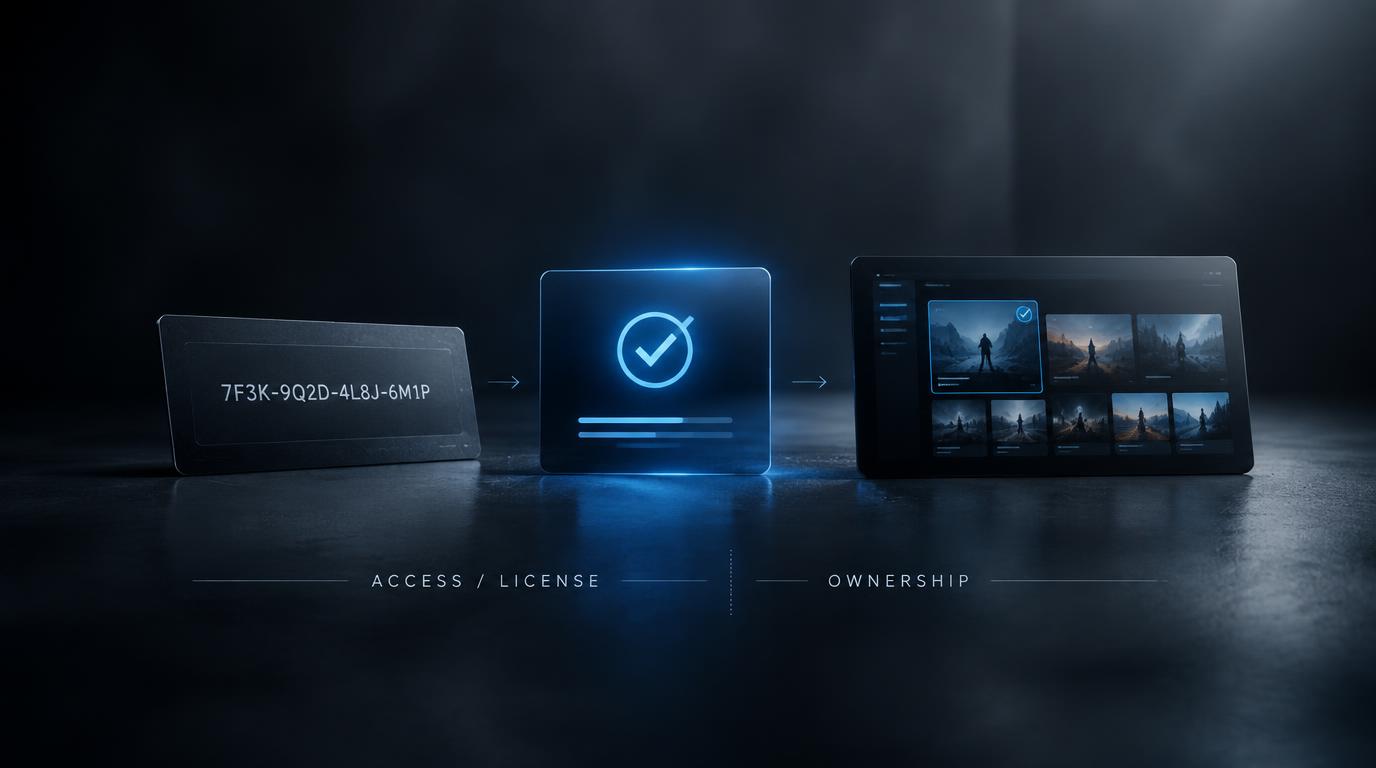
Does activating a game key mean you own the game? License vs entitlement explained.
Evidence pack, escrow windows, and marketplace refund workflow.

Invalid codes, revocations, and when to open a marketplace dispute.

Steam Wallet, PSN, Xbox, and eShop card scam patterns.
Account country, Wallet zones, and pre-purchase checklist.
Permanent PSN country, wallet zones, and pre-purchase checklist.
Account region, 3-month change rule, and pre-purchase checklist.
Currency zones, wrong-region recovery, and pre-purchase checklist.
Enterprise Licensing
IT teams: step-by-step corporate audit procedures-Office MAK keys, entitlement reconciliation, and compliance checklists. Full Microsoft license audit guide.
Read Full Audit Guide
Knowledge Base Featured
See the exact framework we use to evaluate digital marketplaces: license provenance checks, escrow and security weighting, seller transparency controls, and dispute resolution scoring.
Read Audit Methodology
Understanding where a digital key originates is essential to assessing risk. In a typical legitimate flow, publishers allocate keys to authorized distributors, who sell to regional retailers or platform partners. Keys then reach end users through first-party stores (Steam, Microsoft Store, PlayStation Store) at MSRP-tier pricing.
Gray-market channels often intercept surplus stock, promotional bundles, or region-priced inventory. Resellers on peer marketplaces may source keys from wholesale brokers whose provenance is opaque. Educational buyers should verify escrow protection, seller ratings, and refund policies - never assume every discount reflects an official partnership.
Risk note: Platforms may revoke keys sourced from policy violations. No third-party marketplace can guarantee immunity from publisher enforcement.

Hypothetical workflows based on our audit methodology-not verified user testimonials. Marketplace outcomes vary by seller, region, and platform policy.
Scenario A · Steam key
After reading the Steam region guide, the buyer confirms account country matches the listing label, verifies escrow protection, and redeems via the Steam client - never via a shared login.
Scenario B · Windows Retail
Using the OEM vs. Retail guide and safety checklist, the buyer rejects a suspiciously cheap “Retail Pro” listing, selects a documented Retail channel, and keeps activation receipts for dispute evidence.
Scenario C · PSN code
The buyer checks permanent PSN country rules in our PlayStation region guide before purchase, matches wallet zone to account, and opens a marketplace dispute if redemption fails despite a valid-format code.
Key legal principles, regional exhaustion rules, and platform security standards governing digital license transfers and activation safety.
Yes, purchasing digital keys from reputable secondary marketplaces is legal under the Doctrine of Exhaustion and European Court of Justice (CJEU) jurisprudence (Case C-128/11 UsedSoft GmbH v. Oracle). Once a copyright holder sells a license copy within the EEA, their distribution rights to that copy are exhausted.
However, transaction safety depends directly on marketplace escrow protection (48 to 72-hour payout hold periods) and ensuring the purchase is an authentic single-use digital key redeemable in your personal account, rather than a shared login profile.
Retail (FPP): Full license transferable across different PCs and motherboards with official Microsoft telephone and chat support.
OEM (Original Equipment Manufacturer): Legal licenses permanently locked to the machine's initial hardware hash (HWID). They cannot be reassigned to another PC if the motherboard is upgraded.
Volume (MAK/KMS): Corporate batch pools reserved strictly for enterprise networks. Reselling individual MAK slots violates Microsoft licensing terms and leads to activation error 0xC004C003 once the pool is audited.
Publishers can technically revoke keys from an account library only if:
Buying exclusively on platforms with a minimum 48–72h buyer dispute escrow guarantees complete refund reimbursement if a revocation occurs.
Sony PlayStation ToS and Microsoft Xbox Code of Conduct explicitly prohibit selling, sharing, or transferring account credentials. When security systems detect multiple console device IDs binding to a single profile across disparate geographic locations, platforms trigger Console Hardware ID (HWID) suspensions, permanently banning the physical hardware from accessing online networks. Always insist on direct activation keys.
Transactions on our benchmarked reference marketplace operate under mandatory 48-to-72 hour buyer escrow holds. Review seller ratings, delivery timestamps, and platform dispute guarantees before completing checkout.
* Transparency Notice: This is a verified sponsored partner link. If you choose to make a purchase through our monitored partner, KeyAuditLab may earn a small referral commission at no additional cost to you. All security evaluations and escrow audits remain strictly independent.